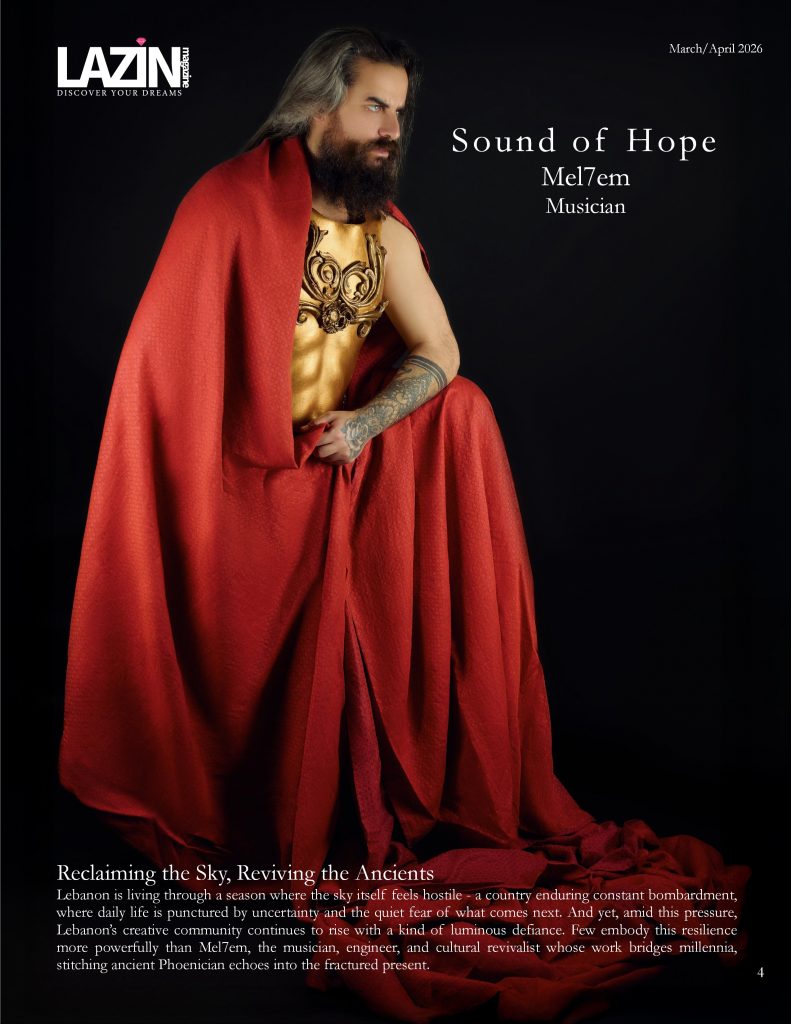
Mel7em
Musician
Reclaiming the Sky, Reviving the Ancients
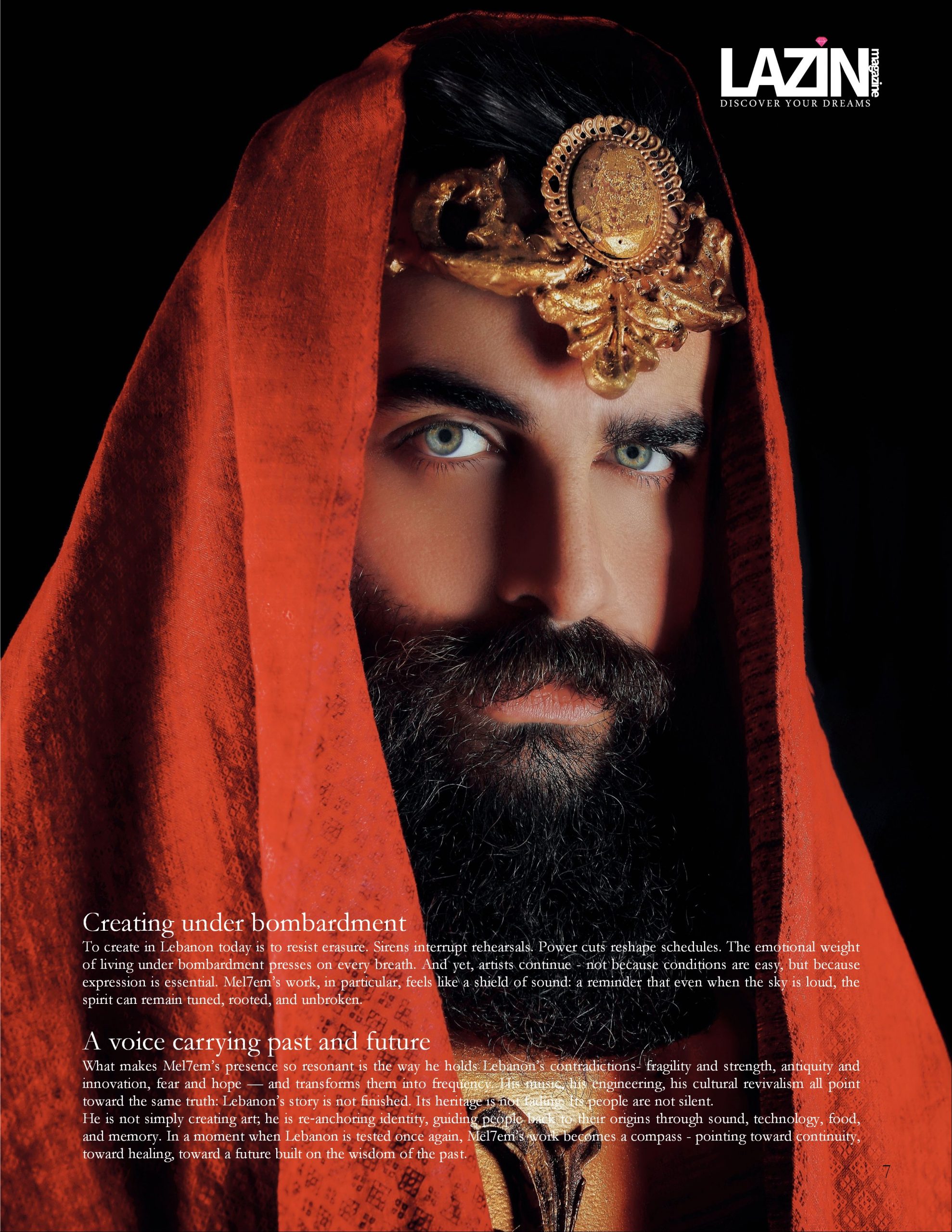
Lebanon is living through a season where the sky itself feels hostile – a country enduring constant bombardment, where daily life is punctured by uncertainty and the quiet fear of what comes next. And yet, amid this pressure, Lebanon’s creative community continues to rise with a kind of luminous defiance. Few embody this resilience more powerfully than Mel7em, the musician, engineer, and cultural revivalist whose work bridges millennia, stitching ancient Phoenician echoes into the fractured present.
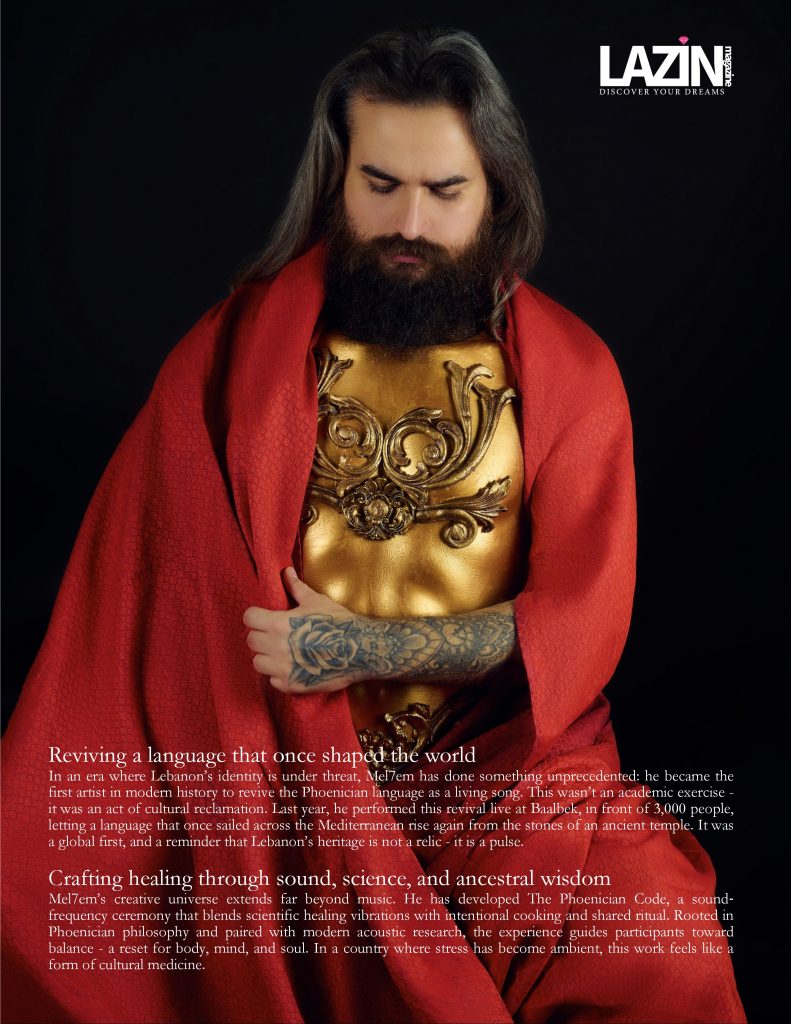
Reviving a language that once shaped the world
In an era where Lebanon’s identity is under threat, Mel7em has done something unprecedented: he became the first artist in modern history to revive the Phoenician language as a living song. This wasn’t an academic exercise – it was an act of cultural reclamation. Last year, he performed this revival live at Baalbek, in front of 3,000 people, letting a language that once sailed across the Mediterranean rise again from the stones of an ancient temple. It was a global first, and a reminder that Lebanon’s heritage is not a relic – it is a pulse.
Crafting healing through sound, science, and ancestral wisdom
Mel7em’s creative universe extends far beyond music. He has developed The Phoenician Code, a sound ‑ frequency ceremony that blends scientific healing vibrations with intentional cooking and shared ritual. Rooted in Phoenician philosophy and paired with modern acoustic research, the experience guides participants toward balance – a reset for body, mind, and soul. In a country where stress has become ambient, this work feels like a form of cultural medicine.
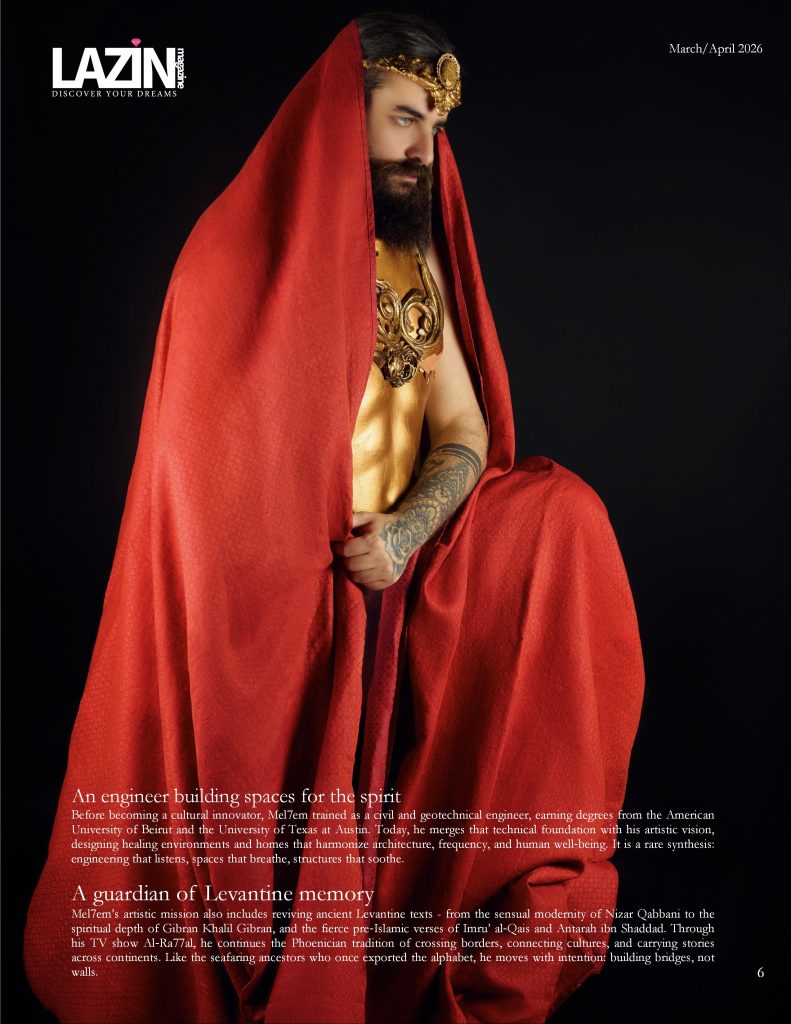
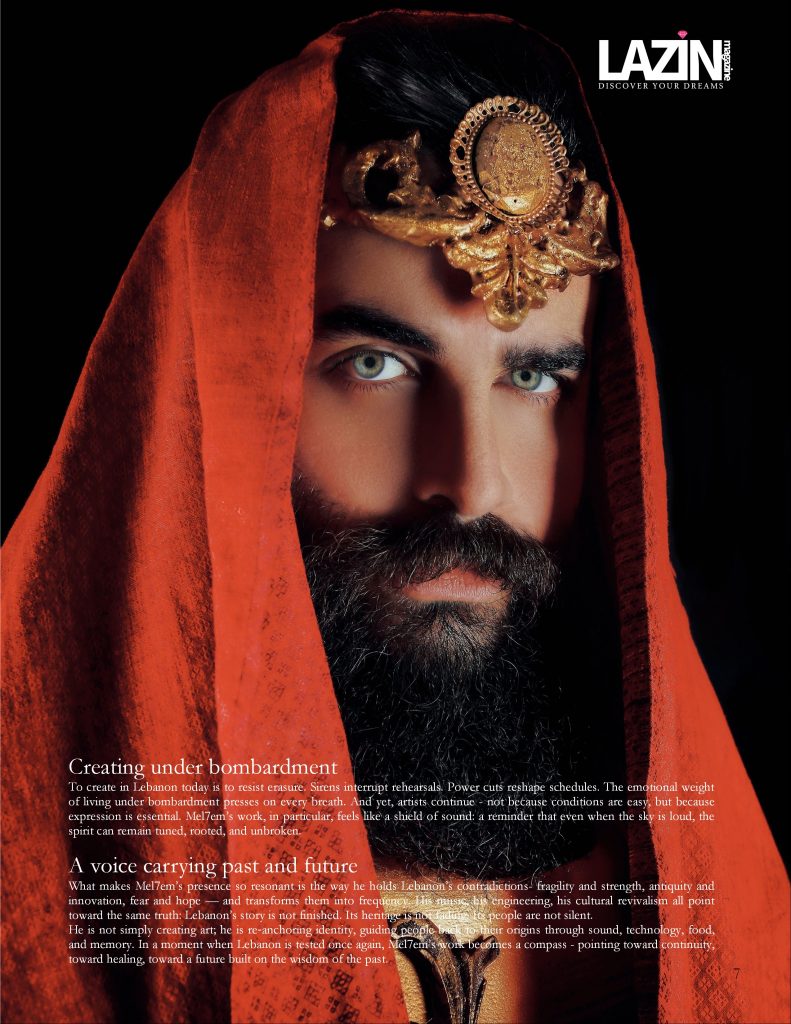
An engineer building spaces for the spirit
Before becoming a cultural innovator, Mel7em trained as a civil and geotechnical engineer, earning degrees from the American University of Beirut and the University of Texas at Austin. Today, he merges that technical foundation with his artistic vision, designing healing environments and homes that harmonize architecture, frequency, and human well‑being. It is a rare synthesis: engineering that listens, spaces that breathe, structures that soothe.
A guardian of Levantine memory
Mel7em’s artistic mission also includes reviving ancient Levantine texts – from the sensual modernity of Nizar Qabbani to the spiritual depth of Gibran Khalil Gibran, and the fierce pre‑Islamic verses of Imru’ al‑Qais and Antarah ibn Shaddad. Through his TV show Al‑Ra77al, he continues the Phoenician tradition of crossing borders, connecting cultures, and carrying stories across continents. Like the seafaring ancestors who once exported the alphabet, he moves with intention: building bridges, not walls.
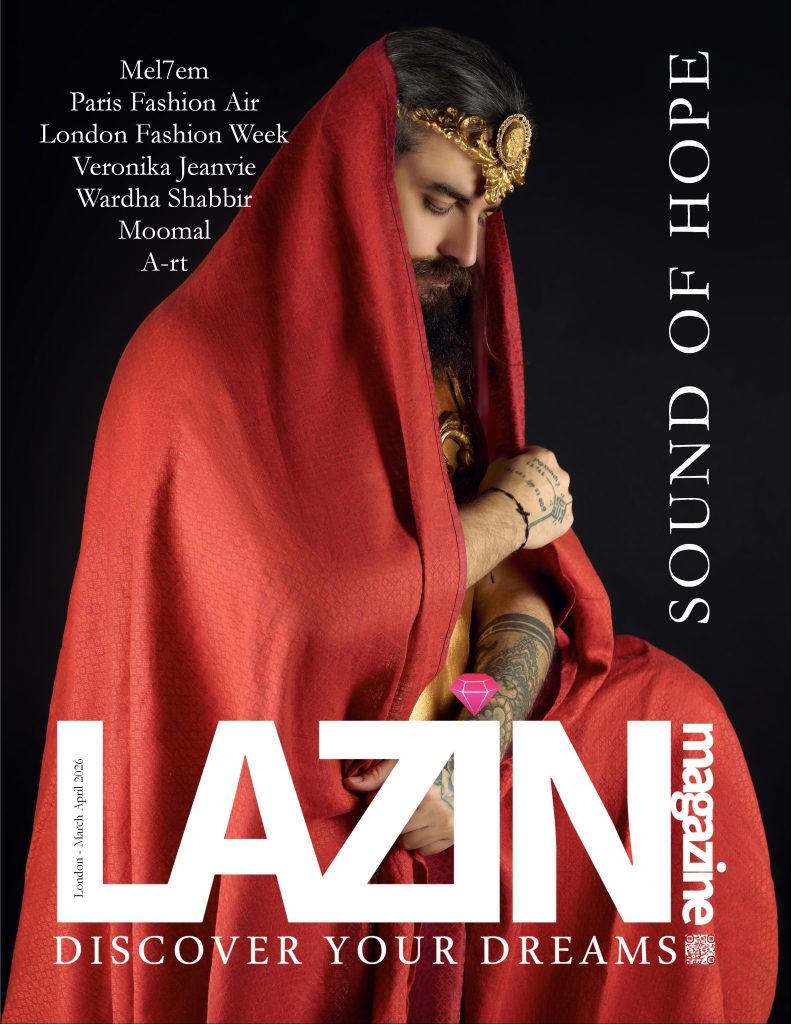
Creating under bombardment
To create in Lebanon today is to resist erasure. Sirens interrupt rehearsals. Power cuts reshape schedules. The emotional weight of living under bombardment presses on every breath. And yet, artists continue – not because conditions are easy, but because expression is essential. Mel7em’s work, in particular, feels like a shield of sound: a reminder that even when the sky is loud, the spirit can remain tuned, rooted, and unbroken.
A voice carrying past and future
What makes Mel7em’s presence so resonant is the way he holds Lebanon’s contradictions- fragility and strength, antiquity and innovation, fear and hope — and transforms them into frequency. His music, his engineering, his cultural revivalism all point toward the same truth: Lebanon’s story is not finished. Its heritage is not fading. Its people are not silent.
He is not simply creating art; he is re‑anchoring identity, guiding people back to their origins through sound, technology, food, and memory. In a moment when Lebanon is tested once again, Mel7em’s work becomes a compass – pointing toward continuity, toward healing, toward a future built on the wisdom of the past.