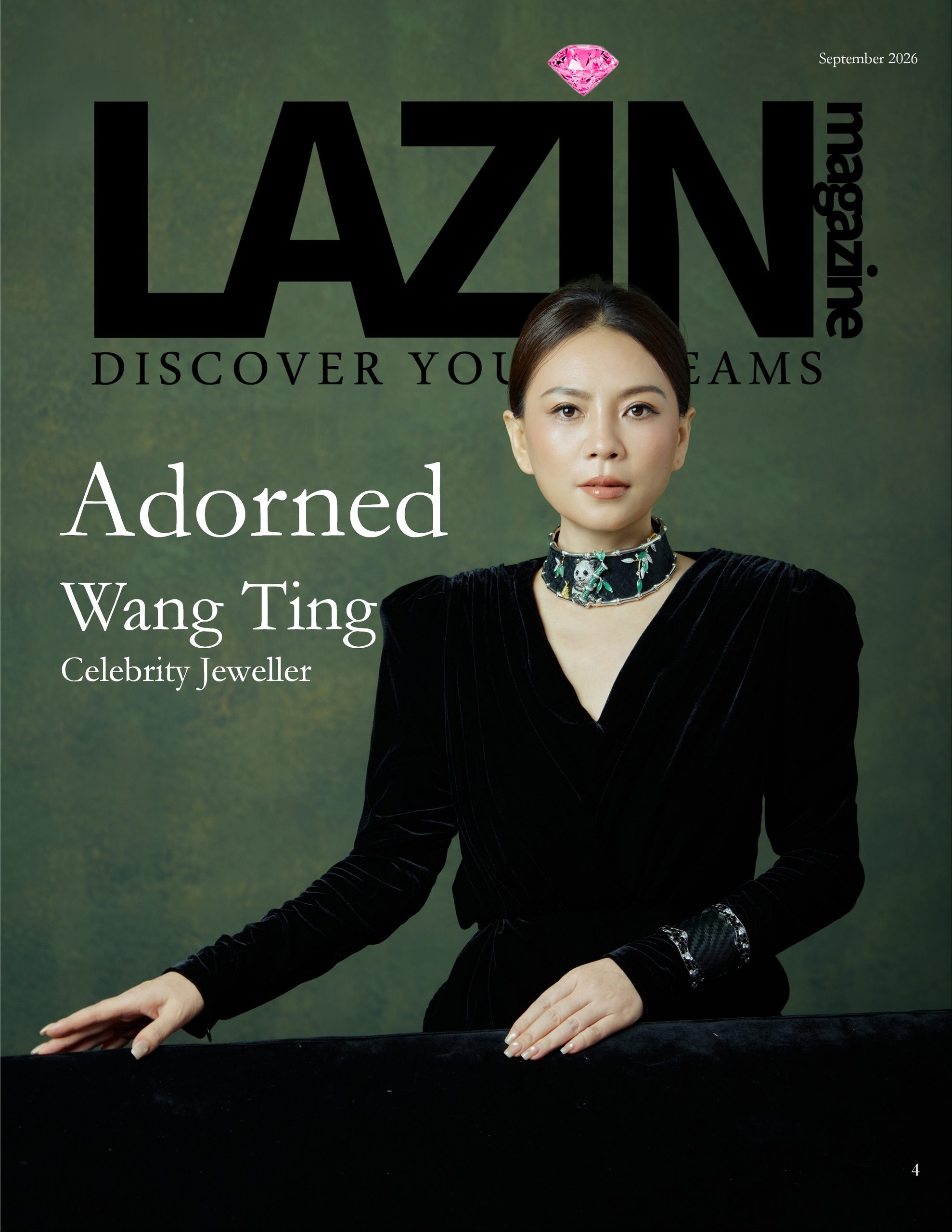
Celebrity Jeweller
The New Chinese Luxury: How Wang Ting is reimagining jewellery through female empowerment, Eastern aesthetics and a more conscious definition of luxury?
For more than two decades, Wang Ting has watched the jewellery industry from the inside. She has seen China’s jewellery market expand alongside the extraordinary rise of Chinese women’s purchasing power. She has watched consumer tastes become more sophisticated, while women have become increasingly confident in defining beauty and success on their own terms. Yet after 24 years in the industry, Wang Ting began to question one of its most deeply rooted assumptions:
What if luxury did not have to begin with rarity?
Traditionally, the value of fine jewellery has been closely tied to scarcity. The rarer the natural gemstone, the greater its price and desirability. Rarity became a language of prestige, while precious stones became symbols of wealth, status and permanence. But from Wang Ting’s perspective, the model presented two increasingly important questions.
The first was environmental: Natural resources are finite. As the luxury industry considers its future, the relationship between beauty and the planet can no longer be treated as an afterthought.
The second was more personal: Jewellery had become associated with occasions deemed important enough to justify wearing it – weddings, anniversaries, formal dinners, milestone celebrations. Beautiful pieces were often bought to be treasured, but also to be stored.
Wang Ting wondered whether jewellery could play a more meaningful role in women’s everyday lives.
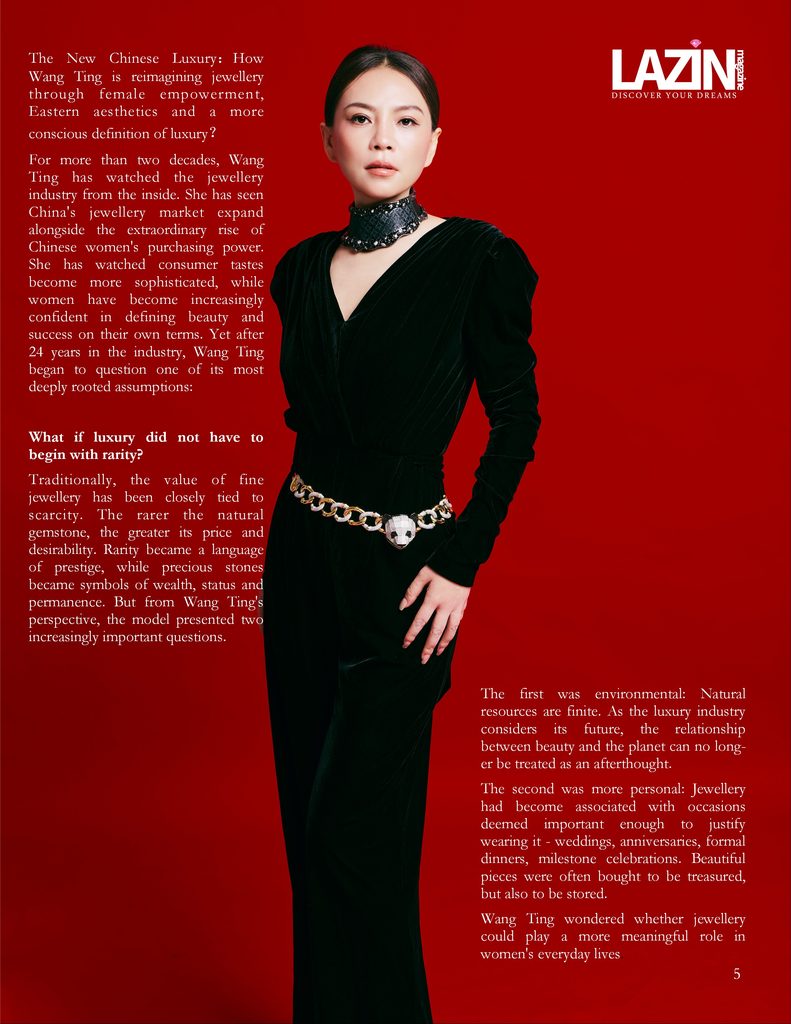
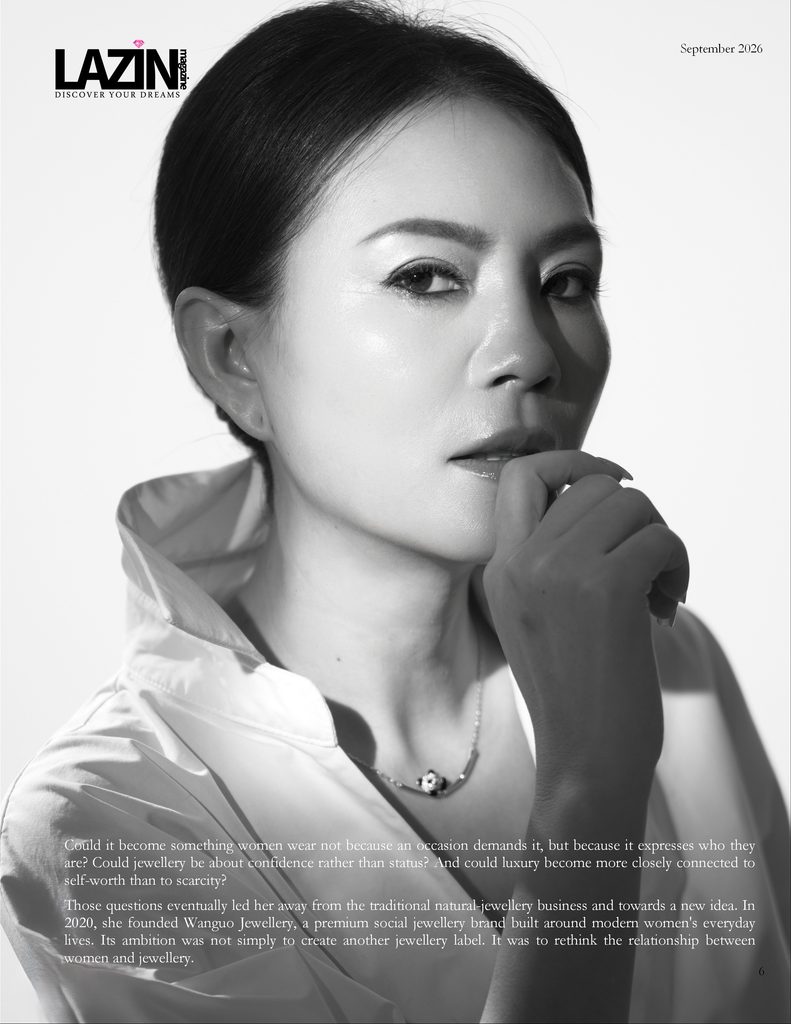
Could it become something women wear not because an occasion demands it, but because it expresses who they are? Could jewellery be about confidence rather than status? And could luxury become more closely connected to self-worth than to scarcity?
Those questions eventually led her away from the traditional natural-jewellery business and towards a new idea. In 2020, she founded Wanguo Jewellery, a premium social jewellery brand built around modern women’s everyday lives. Its ambition was not simply to create another jewellery label. It was to rethink the relationship between women and jewellery.
A different kind of luxury
Wanguo describes itself as a “social jewellery” brand – jewellery designed for the social moments that make up real life. The idea is deliberately simple.
Jewellery should not have to wait for a gala, a wedding or a significant celebration. Nor should it spend most of its existence hidden in a jewellery box. It can accompany a business meeting, an afternoon coffee, dinner with friends, a journey, a celebration – or simply an ordinary day.
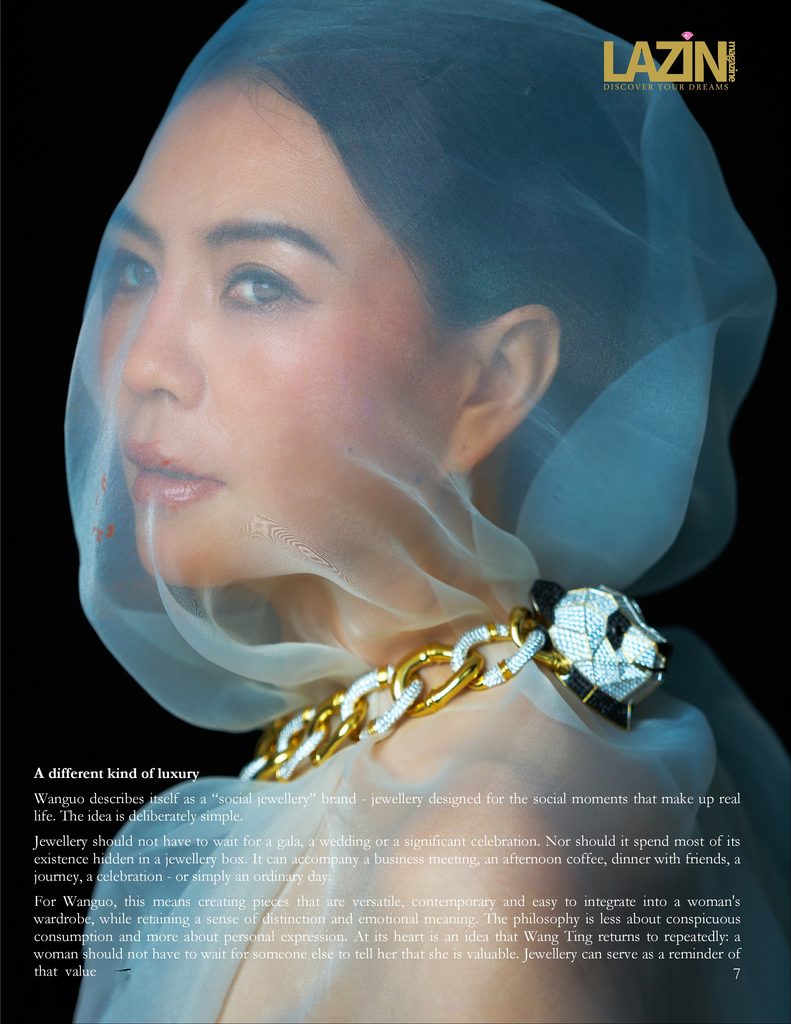
For Wanguo, this means creating pieces that are versatile, contemporary and easy to integrate into a woman’s wardrobe, while retaining a sense of distinction and emotional meaning. The philosophy is less about conspicuous consumption and more about personal expression. At its heart is an idea that Wang Ting returns to repeatedly: a woman should not have to wait for someone else to tell her that she is valuable. Jewellery can serve as a reminder of that value.
The rise of the Chinese woman
Wang Ting’s philosophy has emerged at a particularly interesting moment in China’s consumer landscape.
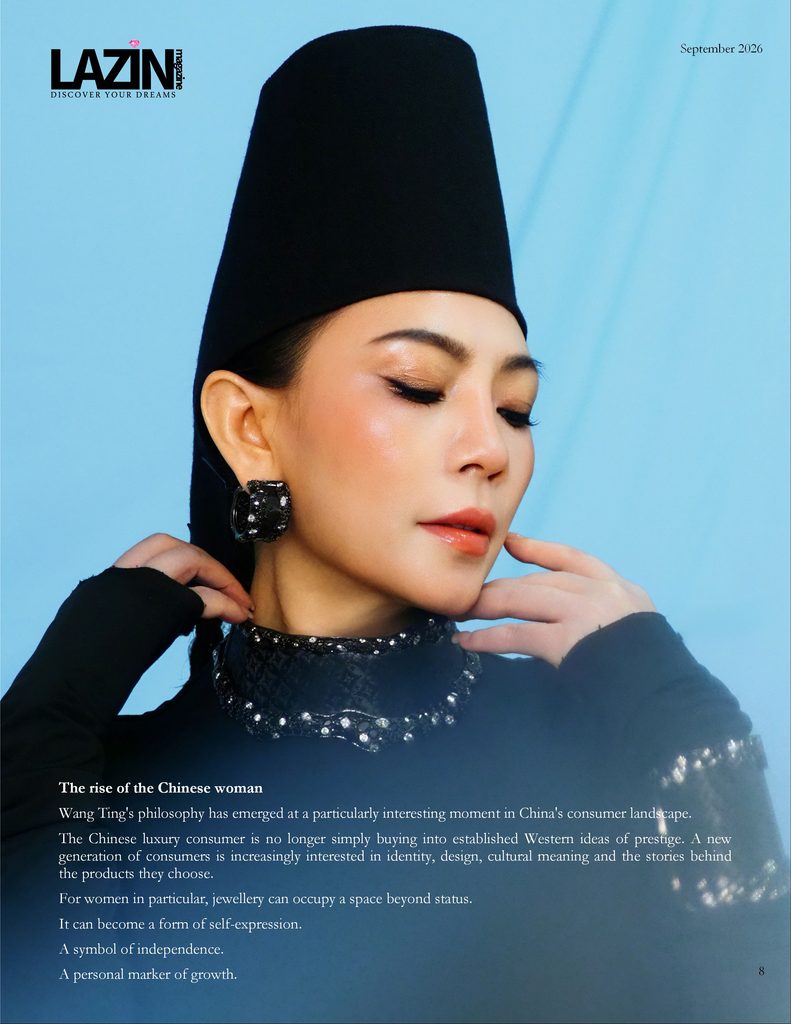
The Chinese luxury consumer is no longer simply buying into established Western ideas of prestige. A new generation of consumers is increasingly interested in identity, design, cultural meaning and the stories behind the products they choose.
For women in particular, jewellery can occupy a space beyond status.
It can become a form of self-expression.
A symbol of independence.
A personal marker of growth.
From the East to Paris
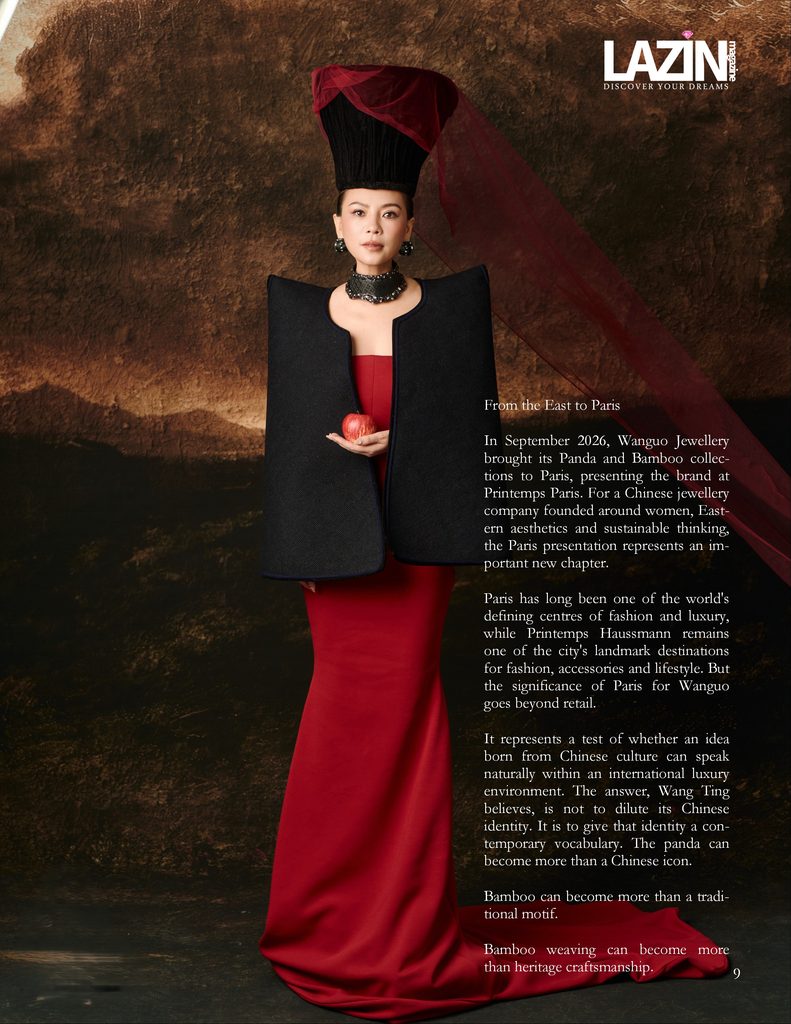
In September 2026, Wanguo Jewellery brought its Panda and Bamboo collections to Paris, presenting the brand at Printemps Paris. For a Chinese jewellery company founded around women, Eastern aesthetics and sustainable thinking, the Paris presentation represents an important new chapter.
Paris has long been one of the world’s defining centres of fashion and luxury, while Printemps Haussmann remains one of the city’s landmark destinations for fashion, accessories and lifestyle. But the significance of Paris for Wanguo goes beyond retail.
It represents a test of whether an idea born from Chinese culture can speak naturally within an international luxury environment. The answer, Wang Ting believes, is not to dilute its Chinese identity. It is to give that identity a contemporary vocabulary. The panda can become more than a Chinese icon.
Bamboo can become more than a traditional motif.
Bamboo weaving can become more than heritage craftsmanship.